
Did you know that the average person has no savings to fall back on during the next economic downturn? Given that an increasing number of analysts predict a new recession over the next several years, this is an even more disturbing reality. There are, however, some straightforward methods to be ready for a downturn, such as knowing how the stock market might be impacted and the recession-proof techniques employed by worldwide investors to possibly profit from it.
The recession that began in 2020 and was caused by COVID-19 lasted for an unprecedented two months. Yet, it affected many people, as recessions tend to do. There’s a chance that the economy is about to retake a nosedive, so it’s a good time to brush up on how to make the most of a slump.
Several investors learned hard lessons after seeing their portfolios wiped out during the crisis. If they had hung on to their investments, in some instances, they would now be worth far more than when they were first purchased.
Here, we’ll go over the basics of what a recession is, what causes them, and how they play out in the real world and on the stock market, as well as provide some advice on how to be ready for the next one and a few methods you can put in your back pocket to weather the storm.
An Economic Recession
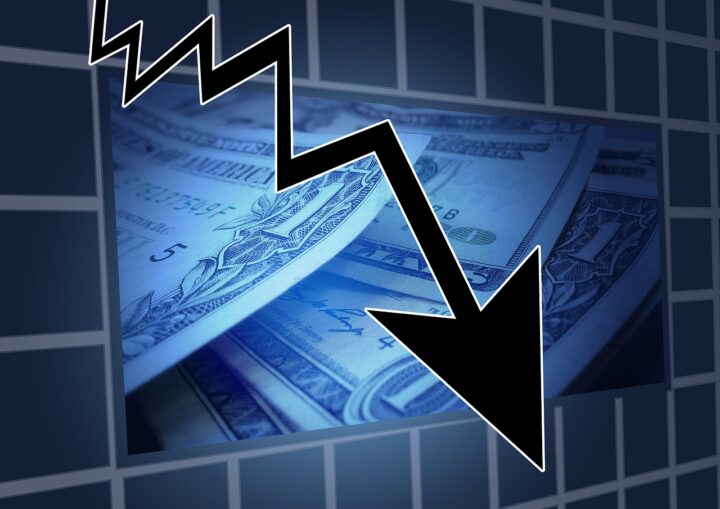
Although the word “recession” does not have a formal definition, it is understood to describe a time when economic activity was low. Recessions are only sometimes associated with long periods of economic downturn. As a practical definition, economists and observers agree that a recession occurs when real (inflation-adjusted) GDP (the value of all goods and services produced in a nation) falls for two consecutive quarters.
The definition offers benefits, but it also has certain limitations. To evaluate whether a nation is in a recession, looking at a broader range of indicators is preferable to just GDP alone. Additional arrows may give you a more accurate and timely picture of the economy’s health.
When production, labor, wage growth, and other financial indices all decline significantly and remain low for an extended period, the NBER classifies the whole sector as being in a recession. As economic activity peaks, a recession starts; when it bottoms out, it ends. In line with this definition, the committee examines various indicators besides GDP when assessing economic developments, such as employment, income, sales, and industrial output.
When Do Recessions Occur, And Why?
One of the most consistent topics of economic study has been the causes of economic downturns. Recessions may occur for several different reasons. Some are linked to substantial swings in the cost of materials and labor. A dramatic increase in energy prices, for example, might foretell a recession. The rising cost of energy multiplies prices, reducing demand in the economy as a whole. Deflationary fiscal and financial policies adopted by authorities in an effort to reduce inflation could also contribute to economic downturns. If these policies are implemented large enough, they might reduce demand for goods and services, which can trigger a recession.
Troubles in the financial markets may be traced back to the beginning of several recessions, including the present one. Rapid debt accumulation often follows periods of sharp gains in asset values and quick expansions in lending. When businesses and families are overextended and having trouble making their debt payments, they cut down on investment and spending, which slows the economy. Such credit booms don’t always lead to recessions, but when they do, they tend to be more expensive than average.
Ways To Cater Trading In A Recession

Get Yourself A Brokerage Account With A Legitimate Provider.
You need to know that your broker has your back and is running a tight ship when the economy is downturned. There is a greater sense of safety and security when dealing with a broker authorized by a well-known financial authority like the Financial Conduct Authority (FCA).
The FCA, ASIC, CySEC, and EFSA are just a few of the world’s most prestigious financial watchdogs that oversee Admirals.
Employ Dollar-Cost Average
The next economic downturn will sneak up on you like many others. Yet a sell-off in the stock market is likely to occur far before a recession. Thus, if it ever happens, recall the first lesson: Most stock market bottoms occur before the recession ends.
With this knowledge, investors may use the dollar-cost averaging strategy to their advantage during a down market. Monthly payments to a retirement account are one example of this strategy in action. In contrast, when the market begins to fall, it is the perfect opportunity to profit by boosting your payments to, or beginning dollar-cost averaging into, a non-qualified trading portfolio.
You can lower your average cost per share over time by using dollar-cost averaging to invest. The net value will drop as the demand arises, making you a profit.
Profit From A Declining Market By Studying CFDs
While trading with CFDs, you expose yourself to various potential rewards and losses. But, consumers may make money in both up-and-down markets by dealing with them, which we discuss in our first recession-proof investing technique below.
In a recession, when some markets are sinking and others are increasing, CFD trading may provide the necessary flexibility.
Customers may continue to use either a standard share-dealing account or a cryptocurrency auto-trading account. While you won’t be able to make money in a declining market, there are still advantages to having this account, such as dividend payments. Nonetheless, accessing various trading goods in the financial sector could be convenient via a single broker.
Fund Your Portfolio Using Dividends
During a recession, the best stocks are those of big, well-established corporations with solid financials and consistent cash flow. These corporations are not only more likely to pay dividends, but they are also better able to withstand economic downturns than smaller corporations with weak cash flows.
Dividends are paid out for several reasons for investors. A firm is solvent and able to weather most economic storms if it has a track record of dividend increases and payments. Dividends, secondly, provide a safety net in the form of a return. You will still make money investing in stocks even if the price drops. For these reasons, dividend equities have a better track record of survival in down markets than their non-dividend counterparts.
Owning dividend stocks is easiest via mutual funds or ETFs, focusing only on dividend payers.
Learn Futures Markets, Stocks, Commodity Markets, And Indexes.
The term “financial markets” encompasses various exchanges, including the Foreign Exchange (FX), Stock, Commodity, Index, Bond, and Cryptocurrency markets. During a downturn, these markets may exhibit either rising or falling tendencies.
The term “safe-haven asset” is often used to describe markets predicted to maintain their value despite fluctuations in the broader financial markets. Gold’s historical significance as money makes it an attractive value shop today.
As you’ll see in the following paragraphs, being well-versed in the many asset classes you may trade to be ready to do business even during economic downturns is essential.
Can You Expect A Recession To Affect Your Investments?
When a recession is imminent, earnings drop and growth becomes negative, increasing the likelihood that the stock market will follow suit. Investors in stocks should exercise additional prudence during a recession since there is a significant risk their holdings will lose value. Yet, anticipating a recession is complex, and selling into a declining market might be unwise. Most financial gurus believe that amid a recession, investors should keep their eye on the long haul and see the downturn as a chance to stock up on “bargains.”
Investing In Tech Stocks Is Another Smart Idea. Here’s 5 Smart Ways to Do It Like A Pro

The excitement surrounding the technology sector and the fact that tech companies are some of the largest in the world are two of the key reasons for the continued focus by investors on this space. Still, it is worth noting that not all technology stocks present profitable investment opportunities.
In fact, making the wrong move in the tech sector can translate to major losses. So, how can you go about investing in the world’s best technology stocks?
1. Investing in Nasdaq Index Funds
Investing in Nasdaq index funds is perhaps one of the best ways for beginner investors to gain some exposure to the technology sector. Nasdaq index funds are aimed at providing broad exposure to all the assets that are listed on the Nasdaq stock exchange and provide excellent diversification when it comes to the search for profits in tech stocks.
The Nasdaq is a tech investment since it is the most tech-oriented index currently on the stock market. If you are an investor who’s looking to invest in Nasdaq index funds, there are some varied options to choose from, which include:
- Nasdaq Composite Funds: The Nasdaq composite index funds offer investors exposure to the 2,500 Nasdaq-listed companies. While the index is predominantly tech-focused, not all the companies listed there are actually tech companies. Still, most investors enjoy the heavy diversification that the Nasdaq composite index funds offer, offering relatively safe exposure to the tech sector.
- Nasdaq 100 Index Funds: The Nasdaq 100 index comprises of the 100 largest and most actively traded stocks offered on the Nasdaq stock exchange. Since the vast majority of the 100 biggest companies listed on the Nasdaq stock exchange are technology companies, investing in the Nasdaq 100 index funds provides a diversified investment in the tech sector in its entirety, with strong emphasis on the large-cap tech giants.
2. Investing in Tech-Focused Mutual Funds and ETFs
Mutual funds and exchange-traded funds (ETFs), in addition to index funds, both provide exposure to various stock categories while still protecting investors through significant diversification.
Today, there are several mutual funds and ETFs that have been designed to offer investors exposure to the tech sector in a way that’s relatively low-risk. Some of the most popular tech-focused mutual funds and ETFs include:
- iShares Expanded Tech Sector ETF
- Technology Select Sector SPDR Fund
- Vanguard Information Technology Index Fund
If you want to invest in tech-focused ETFs and mutual funds, you should consider opening a new trading account with Robinhood. Robinhood is a platform that lets you customize your portfolio with ETFs and stocks – take a look at the HHI share price, for example. Furthermore, when you open a new trading account, you can earn a free share of stock of up to $200 value.

3. Start Looking into the Tech Giants
If you are looking to invest in the tech sector but prefer single-stock investments as opposed to investing in mutual funds and ETFs, looking into the tech giants is a great way to start. You know these companies by name.
The big tech stocks represent companies that have enjoyed so much success that they are essentially household names. Big tech stocks represent a subsector in the tech space that receives more attention compared to just about any other sector of the stock market today.
Apple, Amazon.com, Alphabet (Google), and Facebook are some of the biggest names in tech. While any company, whether big or small, can fail, the biggest tech companies have a long history of solid performance that has allowed them to grow into what they are currently.
Tech giants are known to generate compelling earnings and revenues while staying at the forefront of their respective industries. As a result, they aren’t just household names but rather are some of the biggest names on Wall Street currently.
If you wish to add tech stocks to your portfolio, it is important to do your due diligence. A stock screener such as Trade Ideas will help you narrow down the options to companies that meet your requirements.
4. Invest in Smaller Tech Companies on the Leading Edge of Innovation
Every day, it seems like new technologies are developed. Soon, the average car will be running on clean fuels, rechargeable batteries, or another form of clean energy in addition to driving itself. New medical treatments will be developed. Who knows what innovations will happen in just about any other aspect of life?
The companies responsible for developing world-changing technologies are usually great investment opportunities. Just look at Microsoft. Many people originally believed that home computers would never take off since they were not only expensive but also most people didn’t have any real need for them.
Fast forward today, and computers are involved in just about all aspects of the average American’s day-to-day life. Microsoft is at the same time one of the biggest companies in the world, whose market cap is over $1.5 trillion.
Who knows what the next life-transforming technology will be? One thing you can be sure of is that technological innovation will continue, and the investors that get in on the ground floor of such opportunities have a real potential of becoming millionaires in the process.
Obviously, there’s a downside. The higher the possible reward, the greater the risk. The companies currently developing the next big thing might end up being unsuccessful. For each smash hit product, there are thousands that possibly failed to make it.
So, if you plan to invest in highly speculative emerging technology stocks, you need to have a knack for knowing what is hot and what isn’t as well as doing proper research so that you fully understand the risks.
5. Investing in Future Technologies
The world is changing right in front of your eyes. Artificial intelligence provides a way to communicate with your house, your computer stores everything in the cloud, and you are probably constantly bombarded with information about a currency known as Bitcoin that’s worth 5 figures.
What is the world coming to?
It is moving to an economy that’s more efficient. This economic efficiency revolution can only take place if there are further advances in the following 3 critical technologies:
Artificial Intelligence (AI): AI is being deployed in various areas of business throughout the globe. It is driving everything from digital advertising to medical diagnoses, logistics, and online trading activities.
Blockchain Technology: The blockchain refers to a self-regulated system of contracts. The contracts are used to form some of the most popular technologies in the world. While cryptocurrency is a speculative investment, the blockchain is a solid technology. It has the possibility to revolutionize how transactions happen, both in monetary exchanges and the transaction of data from one party to the next.
Cloud Computing: Cloud computing is a technology that makes computer technologies, such as computing power and data storage, available on an on-demand basis. Users tap into resources “in the cloud” or on the Internet as opposed to owning and managing such systems firsthand. This allows the average person to access the fastest computing capabilities and the highest possible storage capacities at a relatively inexpensive cost.
No matter what the next major change will be, it will most likely involve one or more of the above-listed technologies. If you invest in such emerging technologies early, you will have the chance to reap potentially life-changing returns.
Conclusion
Eventually, the economy will begin to improve again. Investors may participate in one of the largest market booms while avoiding the turmoil that often follows when the economy declines if they build a strategy focused on counter-cyclical businesses with solid financial books in recession-resistant sectors.
Investors with the patience to see the market through these turbulent times will be rewarded in the long run. They’ll be able to sell low and buy high during a bear market, setting themselves up for even greater rewards once the market turns around.