
Nowadays, not many people care about SEO; in fact, most business have reduced their SEO marketing budgets by 50% and more. Everyone is now tilting towards GEO, which is the buzz of the moment. With AI juggernauts being announced as billionaires almost every quarter of the year, you can tell that many, many people are really buying into AI, and marketing teams are not slacking on this.
GEO is where it is now, where blogs, PR agencies, marketing teams, and even IT specialists now optimize their content for quick detection by AI search services like ChatGPT, Perplexity, Gemini, and Grok. Even Google now displays an AI summary for most search terms people look up on its search engine, and these AI overviews carry much information, such that the searcher doesn’t even need to open the links on the search results to get the answer they seek.
So to say, search engine 2nd and 3rd pages are no longer the dead zones of the internet, even the first pages are now dead zones because many people don’t scroll down anymore, they simply pick the information they want from the provided AI summary, which has become the first result, and they close the tab. Hence, if you’re an SEO aficionado, you really should be bothered about GEO.
What is G.E.O?
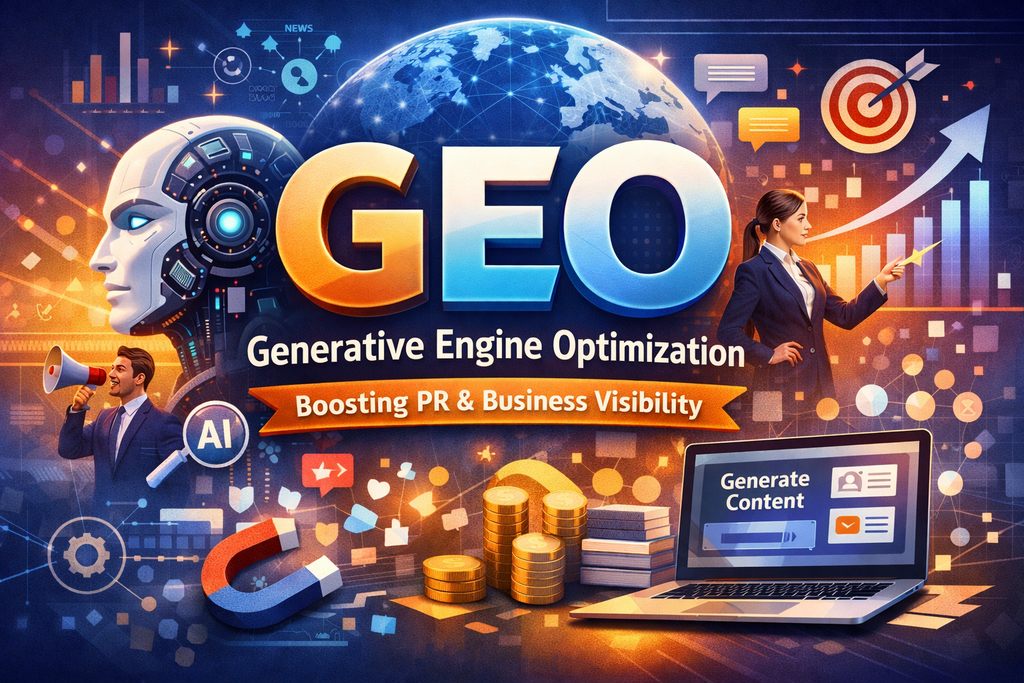
Generative Engine Optimization (GEO) is the practice of writing and structuring your web content, sales copies, ad copies, blog articles, or any other forms of content, so that it is picked up in AI-generated answers when people use AI-supportive search engines like Google and Bing, or multipurpose generative AI engines like Grok, Perplexity, and ChatGPT.
In simpler words, GEO is the optimization of content for AI search results. This is in contrast to SEO, which is the systematic optimization of your content and the structure of your website, entirely, for quick ranking and appearance in top search results. GEO is also different from SEM, which is the running of targeted ads on search engines.
With G.E.O., you’re optimizing for when a user asks an AI/chatbot a question, for your website’s or page’s content to be among the cited sources. It’s not new that generative AIs retrieve and summarize information from many sites (via LLMs), then present a single synthesized answer to a user; GEO is making sure your site and content gets into this stream.
How Generative AI Engines Work?
To better understand the concept of GEO, you have to first understand how generative AI engines get their content and answers when users query them consistently.
Here’s how they work:
- The engine takes your query
- Retrieves relevant documents and content from the web
- The LLM then generates a concise answer grounded in those sources it picked up (this is referred to as Retrieval-Augmented Generation (RAG)).
- You are shown the answer.
All these happen in split seconds or a couple of minutes, depending on the LLM (Large Language Model).
LLMs are extensively trained and prompt-engineered so that they “understand” human languages and patterns effectively. So they can write coherent answers, and when used in search, they can summarize information and cite sources by embedding them just as Wikipedia does. Multimodal models like GPT-4V can even add images, charts, and other non-text components to the content being generated.
GEO vs. SEO
Well, I wouldn’t say SEO is dead yet, but GEO is where the world is tilted towards, at the moment. It has similarities with SEO, but they are, in reality, in contrast to each other.
SEO (Search Engine Optimization) optimizes your website pages and content so they rank high on search engines such as Google, Bing, Yandex, and the like. GEO follows a similar pattern, but with new priorities.
For example, SEO typically favors lengthy, keyword-stuffed content that’s also well structured with headings, meta info, and markdowns. Meanwhile, GEO favors concise, snackable content with more of bullet lists, tables, and FAQs, because these are the type of content that LLMs can easily lift into answers.
Also, SEO works with deep link building (DoFollow and NoFollow links) and site authority, such as domain age, niche relevance, and all of that, but GEO doesn’t care about all of that; it only cares whether the information it’s searching is covered in your content and in a simpler context that’s easy and fast to decode. These are the differences between GEO and SEO.
How to Adopt GEO for Business Visibility
Nearly every website or sales landing page that’s live on the internet right now is optimized for SEO; porting to GEO doesn’t mean undoing your SEO practices; it simply implies fine-tuning it and readjusting your priorities for content creation going forward.
1. More Context, Less Keyword Stuffing
LLMs don’t really care about keyword density; they crawl your content trying to know if it explicitly explains the topic being discussed. So, instead of focusing on saturating keywords across the article or page, focus on adding clearer context to the topic being discussed.
However, this does not imply you shouldn’t have focused keywords for every piece of content you’re writing.
2. Brand Authority
Yeah, LLMs don’t care to know your domain authority score or website spam score, and all of those metrics SEO requires; however, it does care to know whether your brand or website is reputable, generally. So, as a PR agency, digital marketer, or blog owner, aim to get your business website featured on reputable, high-trust publications.
GEO’s scan for brand authority isn’t the same as SEO’s scan, but it’s similar. So, get on as many reputable publications as possible and build a solid, notable brand. LLMs love to learn that “Brand X is an expert in a particular niche,” and as such, they’d always look up Brand X’s website for information when searching for context in the related niche.
3. Keep Things Simple; Less Is More
In today’s era of generative AI search optimization, “less is more.” What this means is that you have to keep your copies, articles, and website content simple and straight to the point.
There’s no need to overstress paragraphs to achieve ambiguous word counts; hit the nail on the head and move on, LLMs love that.
Use AI-Friendly Formatting
AI prefers short paragraphs, bulleted & numbered lists, and clear headings. So to say, AI prefers “simple” articles that are easy to read and understand.
4. Stay Abreast With Your Publications
Of course, these LLMs are already trained with the information existing online, so when they search, they look for “new updates” to what they know, and if your website consistently provides new information about what’s going on in your niche, your website would be a top-cited source in AI search results.
Can PR help with GEO?
Yes. One way to build a strong GEO is to leverage strategic PR. Having reputable PR sites and agencies consistently link to your website will make AI LLMs view it as a strong, reputable, and reliable source of information in your niche.
PR and media relations help shape your brand’s public perception and also help with more visibility. With PR, you can get into recognised news outlets, credible trade publications, and respected industry reports, which are core things LLMs consider to pick sources for news and articles.
Conclusion
Generative Engine Optimization (GEO) is the optimization of your website and pages for AI LLMs to pick them up as sources in its synthesized content. It complements SEO and does not replace it entirely. To make AI love your content, keep things short, use bullets for most mentions, and listings.