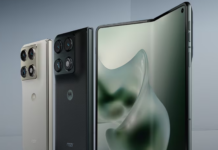

If you don’t know where to look, you’d think the Motorola Moto G (2026) and Moto G Play (2026) are the same phones bearing different names. Well, technically, they are actually the same phone, just about a higher variant and a lower one.
Talking about variant hierarchy, the Moto G (2026) narrowly edges out the Moto G Play (2026) as the better choice for most users. The reasons? We’d get to that. Before that, it is necessary to mention that these two devices come with the same screen size, processor, battery, and weigh the same, too.
They are both budget and mid-range smartphones, with 5G network support, impressive cameras, and a good battery to power each. However, the Moto G Play undercuts the Moto G by about $20 (starting at $179.99 vs $199.99); that cut can be linked to its lower base storage and lesser fast charging capacity.
Motorola Moto G vs Moto G Play 2026: Who Takes the Win?
In the matter of who takes the win, I think it’d be more subjective than objective, but here, we’d expand on the unique specs and features of each model, and that may guide your decision to choose the perfect one that meets your preferences.
Both phones were announced on November 5, 2025, though the Moto G Play 2026 hit the shelves first on November 13, 2025, while the Moto G 2026 followed on December 11, 2025. Both run Android 16 right out of the box and share Motorola’s signature “Moto AI” and Google Gemini integration.
Moto G 2026
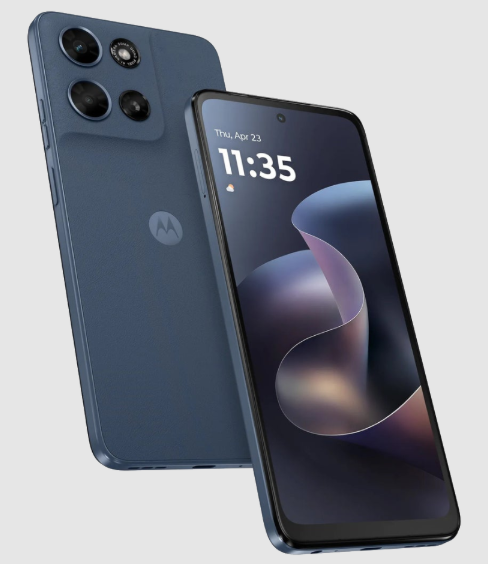
The Moto G 2026 is designed for someone who wants a big-screen, full-featured budget phone without spending flagship money. The 50MP main shooter with f/1.8 aperture is genuinely impressive at this price point; the wide aperture means better light gathering in low-light situations, and Quad Pixel technology groups four pixels into one for brighter, more detailed shots.
The 32MP selfie camera is also a surprising standout. At this price tier, most phones are sticking 8MP or even 5MP cameras up front. Motorola clearly understood that social media culture demands a decent selfie cam, and they delivered.
As seen in most modern devices now, you can use part of the onboard storage on the Moto G 2026 as virtual RAM, extending the onboard 4GB RAM to up to 12GB.
The 30W TurboPower charging is another win. While the battery itself is large at 5200mAh, being able to top it up quickly is always a plus. The eco leather back gives it a premium feel that belies its price tag, and the notchless 6.7-inch display with 120Hz makes for a smooth viewing experience.
Moto G Play 2026
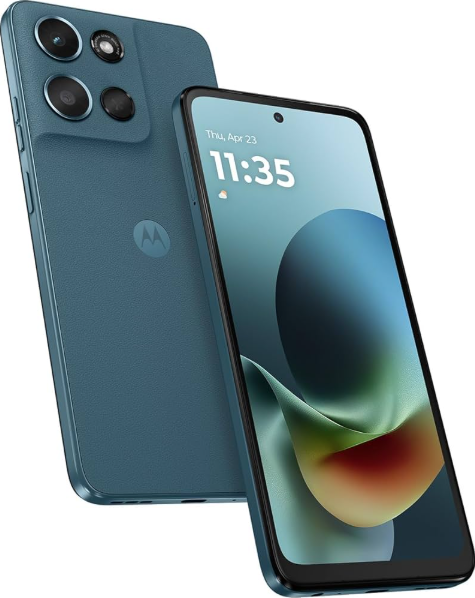
The Moto G Play 2026 is Motorola’s entry-level 5G option, and it does that job competently. The phone’s biggest selling point is arguably the IP52 certification, which certifies the device can handle dust ingress and water splashes without breaking down.
Packing a 32MP main camera looks decent for its price, especially when the camera possesses the patented Quad Pixel technology for improved low-light performance. However, the f/2.2 aperture is notably narrower than the G 2026’s f/1.8, which means it lets in significantly less light.
The 8MP selfie camera is where the G Play shows its budget roots most clearly. In 2026, 8MP is survivable for quick snaps, but it won’t satisfy anyone who cares about portrait quality or video calls.
The 18W charging on a 5200mAh battery is also a bit slow; you’d expect this phone to charge from 0% to 80% in around 1.5–2 hours. Regardless, the G Play is a solid, daily driver for the 2026 budget-conscious smartphone buyer.
Moto G 2026 vs Moto G Play 2026: Full Specs Comparison Table
| Specification | Moto G 2026 | Moto G Play 2026 |
| Announced | November 5, 2025 | November 5, 2025 |
| Released | December 11, 2025 | November 13, 2025 |
| Dimensions | 167.2 x 76.4 x 8.5 mm | 167.2 x 76.4 x 8.5 mm |
| Weight | 202g | 202g |
| Build | Eco leather back, plastic frame | Eco leather back, plastic frame |
| Display | 6.7-inch IPS LCD, 120Hz | 6.7-inch IPS LCD, 120Hz |
| Resolution | 720 x 1604 (~262 ppi) | 720 x 1604 (~262 ppi) |
| Peak Brightness | 1000 nits | 1000 nits |
| Screen Protection | Corning Gorilla Glass 3 | Corning Gorilla Glass 3 |
| Water Resistance | Water-repellent (IP52) | IP52 rated |
| OS | Android 16 | Android 16 |
| Chipset | MediaTek Dimensity 6300 (6nm) | MediaTek Dimensity 6300 (6nm) |
| CPU | Octa-core, up to 2.4 GHz | Octa-core, up to 2.4 GHz |
| GPU | Mali-G57 MC2 | Mali-G57 MC2 |
| RAM | 4GB + RAM Boost | 4GB + RAM Boost |
| Storage | 128GB UFS 2.2 + microSDXC | 64GB UFS 2.2 + microSDXC |
| Main Camera | 50MP, f/1.8, PDAF | 32MP, f/2.2, PDAF |
| Front Camera | 32MP, f/2.2 | 8MP, f/2.0 |
| Video | 1080p @ 30fps | 1080p @ 30fps |
| Battery | 5200mAh | 5200mAh |
| Charging | 30W TurboPower | 18W TurboPower |
| SIM | Nano-SIM + eSIM | Nano-SIM + eSIM |
| Wi-Fi | 802.11 a/b/g/n/ac, dual-band | 802.11 a/b/g/n/ac, dual-band |
| Bluetooth | 5.4 | 5.4 |
| NFC | Yes | Yes |
| USB | USB-C 2.0 | USB-C 2.0 |
| 3.5mm Jack | Yes | Yes |
| Stereo Speakers | Yes, Dolby Atmos | Yes, Dolby Atmos |
| Fingerprint Sensor | Side-mounted | Side-mounted |
| AnTuTu (v11) | ~552,360 | ~524,096 |
| Colors | Slipstream, Cattleya Orchid | Tapestry |
Moto G 2026 vs Moto G Play 2026: Head-to-Head Comparison
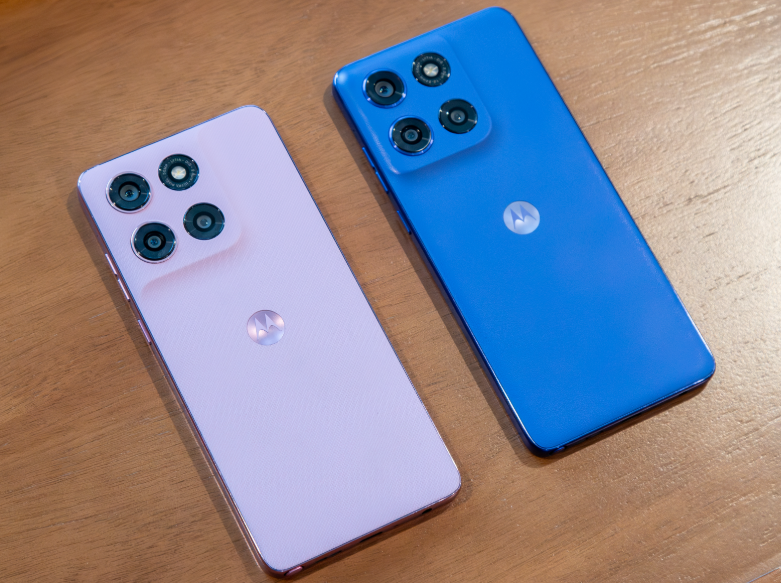
These two devices are very much the same in many aspects, yet possess subtle distinctions worth discussing.
Design and Build Quality
These two phones are, physically speaking, the same phone. Identical dimensions, identical weight, same eco leather back, same plastic frame, and same Corning Gorilla Glass 3 front. I mean, you could see that on the specs sheet. If you lined them up on a table without looking at the rear camera module, you’d have a hard time telling them apart.
Away from the looks and talking about sturdiness, these devices are quite sturdy, and being rated IP52 means they can withstand light rainfall and dust. The Moto G 2026, however, edges ahead slightly in color options; it’s got Pantone Slipstream and Cattleya Orchid finishes versus the G Play’s single Tapestry option.
Performance and Software
You may not like it, but both phones use a 6nm MediaTek Dimensity 6300 chip paired with a Mali-G57 MP2 GPU. Of course, this is an entry-level 5G-compatible SoC capable of handling everyday tasks smoothly.
In benchmarks, the Moto G and G Play are nearly identical; AnTuTu benchmark scores give the Moto G 2026 552,360 and the Moto G Play 524,096 on v11. Also, both devices support the RAM boost feature to extend your memory up to 12GB; that’s adding about up to a 8GB of virtual RAM.
Both phones ship with Android 16 and include Google Gemini, Circle to Search, Moto Secure, Moto Unplugged, and ThinkShield security. The G Play adds “Family Space,” a unique feature for setting up a restricted, child-friendly profile on the device. Motorola promises two OS updates and three years of security patches for both.
Camera Quality
This is where the Moto G 2026 takes a big leap. The Moto G 2026 sports a 50MP main camera at f/1.8, allowing substantially more light to penetrate the lens during your shots. Also, it’s got a 32MP selfie camera, which is, frankly, exceptional for a budget phone.
The Moto G Play 2026, by comparison, uses a 32MP main (rear) camera at f/2.2 aperture. The selfie camera drops to 8MP, which is a significant downgrade if selfies, video calls, or Instagram stories are part of your daily life. However, both phones max out video recording at 1080p @ 30fps. No 4K support on either device.
Battery Life and Charging
Both phones pack a large 5200 mAh battery, and Motorola claims up to two days of use. However, NanoReview scores show the G Play has higher endurance of 69 vs 68 of the Moto G. One can say that the reason the G Play scored higher is possibly because of its lower-res cameras and slower charger, which consumes a bit less power.
In PhoneArena’s tests, the Moto G Play lasted about 9h27m while the Moto G managed about 7h52m under equivalent loads. Regardless, you could get up to 24 hours on these devices on “normal” usage. The Moto G supports 30W TurboPower (reaching ~50% in 30 min) while the G Play tops at 18W (~30% in 30 min). Wireless charging is absent on both phones.
Pricing
In most stores, the Moto G 2026 starts as low as $79.99 on select carrier deals, with unlocked pricing typically landing around $129–$149. The Moto G Play 2026 runs $149–$179.99 unlocked. However, in many stores, the Moto G 2026, without deal offers, sells from $179.99 to $259.99 or even higher.
Verdict: Which Should You Buy?
Considering all factors, the Moto G (2026) would be the choice for most buyers, and the price difference from the Moto G Play (2026) isn’t that significant; I would call this a strategic play from the Motorola sales department.
The 50MP camera on the Moto G (2026) is a real eye catcher, coupled with the 32MP front shutter and 30W fast charging, all on the same processor, same battery, and same display as the Moto G Play (2026).
But then, the Moto G Play (2026) is still a great device; it has a dedicated MicroSD slot to expand its storage up to 500GB or higher, and you can extend the RAM too. Its cameras shoot decent photos, and the battery seemingly lasts longer.
Summary
I’d personally prefer the Moto G (2026), but the Moto G Play (2026) is still an ideal alternative, especially if you’re on a tight budget. These two phones start below $190, and there are exclusive deal offers that bring the prices down to sub $100.