
The way physical products come to life has changed dramatically over the past two decades. What once required weeks of manual drafting, handmade prototypes, and iterative guesswork can now be compressed into days of digital modeling, simulation, CNC milling, and precision fabrication. Engineers and designers are working with tools that not only speed up production but fundamentally change what is possible to create.
These changes are not limited to large corporations with massive research budgets. Smaller manufacturers and independent product developers now have access to technologies that were once exclusive to aerospace or automotive giants. The result is a broader, more competitive, and more innovative product development ecosystem where good ideas can move from sketch to shelf faster than ever before.
From Sketch to Screen: The Digital Design Revolution
Computer-aided design (CAD) software has replaced the drafting table as the primary tool for product development. Engineers can now create fully detailed three-dimensional models of a part or product before a single piece of material is touched. These models contain precise measurements, tolerances, and material specifications, all of which can be tested virtually before committing to physical production.
The real advantage of digital design is simulation. Stress testing, thermal analysis, and fluid dynamics can all be run on a virtual model, catching structural weaknesses or design flaws that would otherwise only be discovered after expensive physical tests. A structural engineer designing a bracket for a medical device, for instance, can simulate thousands of loading conditions in hours rather than months. Once a design is finalized, it is often transferred into manufacturing workflows such as CNC milling, which translates digital models into highly precise physical components through automated machining.
Collaboration has also been transformed. Cloud-based CAD platforms allow design teams spread across different cities or countries to work on the same model simultaneously. Version control, comment threads, and real-time updates eliminate the confusion that plagued earlier workflows where teams passed static files back and forth by email.
Parametric design tools have added another layer of efficiency. Instead of redrawing a component from scratch when a specification changes, engineers adjust a single variable, and the software automatically updates every related dimension in the model. This responsiveness has made design iteration far less costly in both time and effort.
CNC Machining and the Precision That Modern Products Demand
Once a digital design is ready for physical production, the path from file to finished part often runs through computer numerical control (CNC) machining. CNC technology uses pre-programmed software instructions to control the movement of cutting tools, removing material from a workpiece with a level of accuracy that human hands simply cannot match. Tolerances measured in thousandths of an inch are achievable consistently and repeatedly.
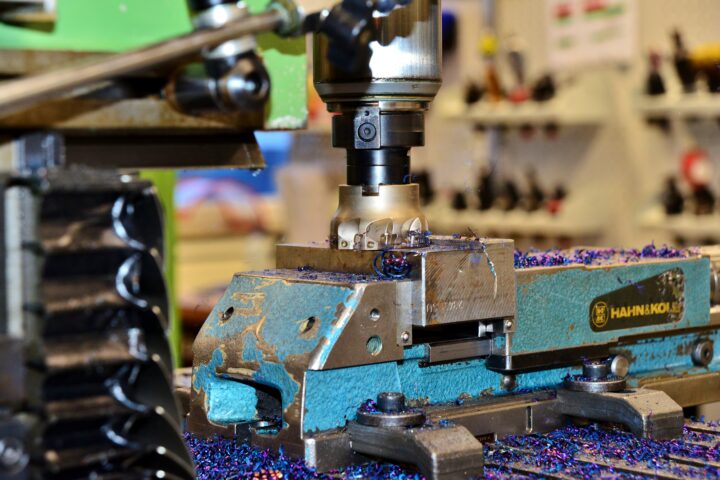
Among the most widely used methods are CNC milling services, which use rotating multi-point cutting tools to shape materials, including metals, plastics, and composites. A CNC milling center can execute complex cuts, slots, holes, and contoured surfaces in a single setup, reducing handling time and the risk of accumulated errors. For components where geometry is complex and precision is non-negotiable, precision CNC milling services are often the only practical option.
Multi-axis machining has expanded what is achievable. Standard three-axis machines move along the X, Y, and Z planes, but 5-axis CNC milling adds two additional rotational axes, allowing a single machine to approach a part from nearly any angle. This capability is essential for producing turbine blades, orthopedic implants, and aerospace components that would otherwise require multiple setups or secondary operations.
When combined with CNC milling and turning, where a part is both milled and rotated against a cutting tool in a single workflow, manufacturers can produce finished components with tight tolerances and complex geometries far more efficiently than traditional methods allowed.
Rapid Prototyping and the Compressed Development Cycle
Getting a product to market quickly without sacrificing quality is one of the central challenges of modern manufacturing. Prototyping used to be a bottleneck. A design team might wait weeks for a physical sample, review it, request changes, and wait again. Technology has collapsed that cycle significantly.
Additive manufacturing, commonly known as 3D printing, allows teams to produce functional geometry proofs within hours from the same digital file used for production. While 3D-printed parts are not always suitable for final production due to material limitations, they are extremely useful for evaluating form, fit, and early mechanical performance. Engineers can hold a part, test an assembly, and identify issues long before committing to production tooling.
Prototype CNC milling offers a more rigorous alternative for parts that need to match production-grade material properties. A CNC milling company can machine a small batch of parts from the actual intended material, giving engineers real-world performance data under realistic conditions. This approach is especially common in industries like medical devices and aerospace, where material behavior under load or temperature variation is a design-critical variable, not just a final production concern.
Custom CNC milling allows designers to request exactly what their design specifies, rather than adapting a design to fit available off-the-shelf components. CNC milling parts can be produced to unique geometries, specific alloys, and exacting surface finishes. This flexibility encourages more ambitious design thinking, since engineers know that a part can be manufactured precisely as designed rather than as a compromise.
Automation, Quality Control, and the Intelligent Factory
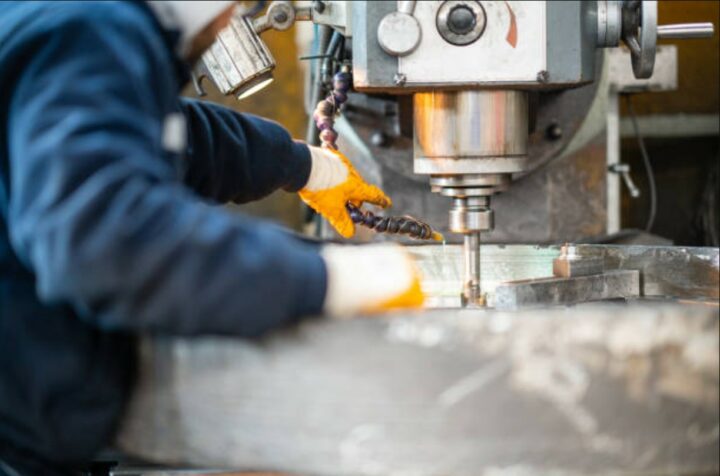
Manufacturing has always involved repetition, and repetition is where automation delivers its clearest value. Modern CNC milling companies run multi-machine cells where automated loading systems, robotic arms, and conveyor systems keep machines running through nights and weekends with minimal human intervention. Cycle times shrink and output scales without proportional increases in labor cost.
Quality control has moved beyond sampling. In-line measurement systems using coordinate measuring machines (CMMs) and laser scanning can inspect every part as it comes off the machine rather than checking one part in every hundred. Any drift in machine calibration is detected immediately, and the system can flag or halt production before defective parts accumulate. This shift from reactive to proactive quality management has reduced scrap rates significantly across industries.
Data connectivity ties all of this together. Sensors embedded in machines feed real-time performance data to centralized dashboards, where production managers can monitor tool wear, spindle loads, cycle times, and machine availability from a single screen. Predictive maintenance algorithms analyze these data streams to flag tools or components approaching failure before a breakdown occurs. The result is a factory that is not just faster but smarter, one that uses information to prevent problems rather than simply react to them.
The Future Is Already Being Built
The technologies reshaping product design and manufacturing are not theoretical. They are active in facilities producing everything from consumer electronics to surgical instruments right now.
CNC turning and milling, digital simulation, rapid prototyping, and intelligent automation are working together to shrink development timelines, improve quality, and make it possible to bring more complex products to market at competitive cost. For businesses willing to invest in modern tooling and processes, the opportunity to move faster and build better has never been more concrete.