
It’s no secret that upgrading your tech costs money. Phones, laptops, gaming systems—the price tags attached to them seem to climb higher every single year. But there’s a strategy some shoppers use to save big that most people overlook.
Buying gift cards strategically before making tech purchases. This approach can slash hundreds of dollars off your next big buy, and it’s simpler to pull off than you might think.
The Hidden Potential of Gift Cards
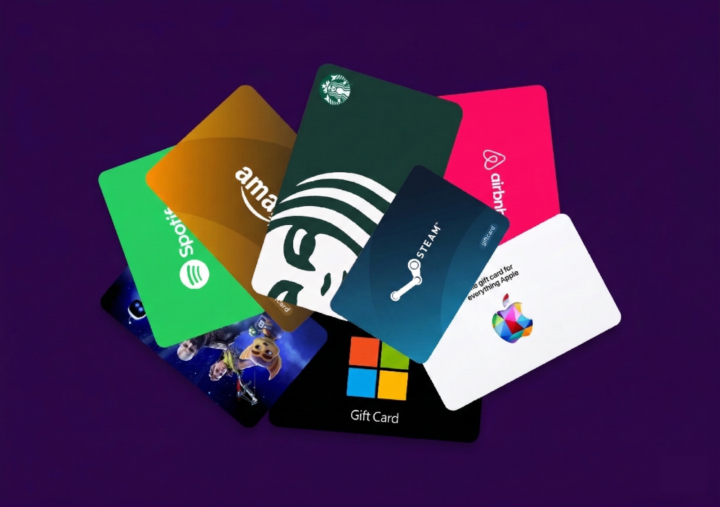
Gift cards aren’t just presents. They’re a tool for saving on tech purchases.
The strategy is simple. Buy discounted gift cards first. Then use those cards to pay for your gadget. Any discount you received on the cards is applied directly to your purchase price.
Major electronics retailers all take them, including:
- Amazon
- Best Buy
- Apple
- Newegg
A 5-10% discount might not sound like much. But on expensive items, it’s real money. Worth the few minutes it takes.
Where to Find Discounted Gift Cards
Buying discounted gift cards is a straightforward way to lower your spending. It works, provided you know the best places to shop for them.
The best approach is to visit a reputable gift cards marketplace, where users can resell unwanted cards. Because these are secondary markets, cards are frequently listed at prices lower than their original balance, letting you keep the difference.
The savings potential is significant. Depending on the retailer’s popularity and current market demand, you can typically save between 3% and 30% on your purchase.
Electronics retailers are a prime example. Gift cards for these stores are common because tech items are frequently given as presents, but the recipient often ends up wanting something else.
Strategic Timing for Maximum Savings
Timing matters with this. Hit major sales events—Black Friday, Cyber Monday, back-to-school promotions. Those have already dropped prices on tech. Now add discounted gift cards on top.
Example: A laptop normally costs $1,200. Goes on sale for $999. You buy $1,000 in gift cards from a gift cards marketplace at 10% off. Cost you $900. Use them on the sale laptop. Total spent? $900. Original price was $1,200. That’s $300 saved. Just by stacking sale prices with discounted cards.
Stacking Discounts Like a Pro
True savings experts know that the magic happens when you stack multiple discount methods. Gift cards represent just one layer of potential savings. Consider this multi-layered approach:
- Purchase discounted gift cards through reputable marketplaces.
- Use a cashback credit card or shopping portal when buying the gift cards.
- Wait for the tech item to go on sale at the retailer.
- Apply any available coupon codes or promotional offers.
- Use your discounted gift cards to complete the purchase.
- Earn cashback on the purchase through browser extensions or rewards programs.
Each layer adds to your total savings, potentially reducing your cost by 30% or more on expensive tech items.
Avoiding Common Pitfalls
Gift cards can save you money, but you need to watch out for a few things. Some sellers aren’t reliable, and digital transactions have their own set of problems.
Best to buy from established sites that have buyer protection and verified sellers. If a deal seems unrealistically good, it probably is—skip it.
Also, think about where you’ll actually use the cards. Amazon or Walmart cards are easy because those stores sell pretty much everything. Cards for smaller electronics retailers might save you more upfront, but then you’re stuck shopping there.
Sometimes that store doesn’t have the best price on what you want, and your discount doesn’t matter as much.
The Digital Gift Card Advantage

Digital gift cards are simply more practical for tech shopping. They get delivered instantly, you can’t lose them, and they work immediately for online purchases. That matters when you’re trying to catch a flash sale—no waiting days for a physical card to show up.
Several websites now sell discounted digital gift cards. The process is fast: find a deal, buy the card, and the funds hit your account within minutes. You can usually complete your tech purchase in the same session.
Building a Gift Card Reserve
If you regularly buy tech from certain stores, it makes sense to keep a small stack of gift cards on hand. When you find them discounted—like during promotions or from resellers—buy a few extra.
You tie up some money upfront, but later, when a good deal pops up, you’re paying with discounted cards instead of full price. Check the terms first, but most gift cards don’t expire.
Having a reserve means you can buy immediately instead of waiting to find a deal on the payment method.
Combining with Trade-In Programs
Don’t overlook trade-ins when you’re doing the gift card thing. They pair up nicely.
You can get store credit at places like Best Buy and Apple by trading in old electronics. That phone gathering dust or your previous year’s laptop both have trade-in value.
Use that credit first, then pay the rest with discounted gift cards. Say you get $200 for your old phone and the new one costs $800. You need $600 more. Buy $600 in gift cards at 10% off, and you’re paying $540 for that $600. Total out of pocket? $540 plus the phone you weren’t using. Much better than $800 cash.
The Mathematics of Gift Card Savings
The numbers speak for themselves.
Spend $2,000 on tech over a year. Get gift cards at 10% off. You save $200. Nothing complicated about it.
Spend more and save more. Families buying for multiple people. Gamers with expensive builds. Home office setups. When your total hits $4,000 or $5,000, 10% is $400 to $500. Better discounts push that higher.
Conclusion
Tech keeps getting better and also keeps getting more expensive. That’s just how it goes. But you don’t have to just accept the prices and pay whatever they ask. Gift cards give you a way to push back on those costs without jumping through hoops or doing anything complicated.
Find a decent marketplace, pick up cards at a discount, time it right, and you’re basically getting a markdown on whatever you’re buying.
Next time you’re shopping for a new phone or laptop, think about how you’re paying. It makes a real difference. Put in a little effort upfront and you’ll end up with the same gadget and extra cash left over.