
A wallet that only accepts cards is a card form with a balance. Users expect to top up from a bank account, pay with a phone, and cash out within a day, and every extra method brings its own rules, settlement times, and failure modes. The most important decision is how to keep those methods from leaking into the wallet itself.
Wallets also come in different regulatory shapes. Closed-loop wallets for one merchant carry little regulation, while open and semi-closed wallets that hold customer funds usually need e-money or payment institution authorisation, and crypto balances bring VASP rules under MiCA. Teams experienced in ewallet app development tend to map the fund flow first, because it decides the licence, the partners, and the architecture long before any screen exists.
Today’s post is aimed at showing you how to build secure transaction ledgers, integrate cards and local payment gateways, and manage unified payment APIs at scale.
Which payment methods should a wallet support first?
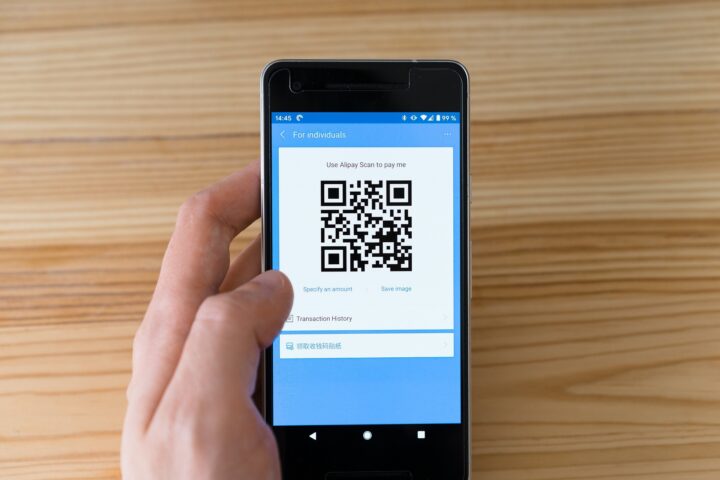
Start with the methods your users already rely on for the job the wallet does, then add others as demand grows. A remittance wallet leads with bank transfers, a shopping wallet leads with cards and device payments, and a trading wallet leads with transfers and stablecoins. Pick two or three for launch and keep the rest on the roadmap.
| Method | Typical role in the wallet | Main build concern |
| Debit and credit cards | Top-up and spending | PCI DSS scope, 3-D Secure, chargebacks |
| Bank transfers (SEPA, SWIFT, Faster Payments, ACH) | Top-up and cash-out | Each rail has different speed, cut-offs and return rules |
| Account-to-account via open banking | Pay by bank | Customer consent and strong authentication |
| Apple Pay and Google Pay | In-app and in-store payments | Token provisioning and device security |
| Stablecoins and crypto | Cross-border value transfer | Custody, licensing and travel-rule compliance |
Regulation shapes the order. In the EU, PSD2 requires strong customer authentication for most electronic payments, so card and open banking flows need a step-up challenge built in. Crypto support depends on your authorisation, so confirm the licence path before you promise it on a roadmap. Cash-out deserves as much design time as top-up: users judge a wallet by how easily money leaves it, and each rail has its own cut-off times and return codes.
How do you add methods without rewriting the wallet?
Put a ledger in the middle and treat every payment method as an adapter around it. The wallet then speaks one internal language, and each provider speaks its own. A new method becomes a new adapter, with no change to balances, limits, or the customer’s transaction history.
- Make a double-entry ledger the only record of balances: Providers report what they processed, but the ledger decides what the customer owns. Every movement posts as a balanced entry.
- Wrap each method in an adapter with one shared interface: Authorise, capture, settle, refund, and reverse should mean the same thing internally for a card, a SEPA transfer, or a stablecoin payout.
- Tokenise card data at the provider: Your servers then handle references instead of card numbers, which keeps PCI scope narrow.
- Add an orchestration layer for routing: It chooses a provider by cost, region, and availability and falls back when one is down.
- Plug in identity verification as another adapter: Services such as SumSub, Veriff, and Onfido can be swapped as you enter markets, and verification tiers can set transaction limits.
Idempotency deserves its own attention. Networks retry, users double-tap, and webhooks arrive twice. Give every operation a unique key so a repeated request never moves money twice. Store the key with the ledger entry, so a retry returns the original result instead of creating a second one.
What breaks first when a wallet scales?
Operations break before code does, and the early warning signs are usually visible in finance and support queues. Watch these areas from the first live month:
- Reconciliation. Provider settlement files rarely match your ledger perfectly. Automate matching and review exceptions daily.
- Refunds and disputes. A refund on a card, a bank transfer, and a crypto payment follow three different paths. Define each one before launch, including who can approve a manual reversal.
- Limits and tiers. Customers at different verification levels need different caps, and the rules must live in configuration, not in code.
- Provider outages. Fallback routing only helps if you have tested it, and it needs a clear rule for what happens to payments already in flight. Run a failure drill before the first peak season and record how long recovery takes.
- Support tooling. Agents need a single timeline per transaction across every method.
Test the combinations too. A customer who tops up by card, spends part of the balance and withdraws the rest by bank transfer touches three adapters and one ledger, and that single journey is the best regression test you can write.
A multi-method wallet is a ledger, a set of adapters and an operations routine. If the ledger stays clean and each adapter stays thin, adding the next payment method becomes a configuration task instead of a rebuild.