
A subscription rarely becomes a problem on the day it is purchased. The problem usually shows up months later, when the original reason for paying is gone, but the billing remains. A streaming service kept after one series, an app opened twice, or a trial that quietly became a monthly charge can all stay on a card statement far longer than expected.
 That matters more now because there are simply more recurring payments competing for the same budget. Streaming, cloud storage, fitness apps, editing apps, delivery memberships, news, AI services, learning apps. Not all of them are expensive. That is partly why they survive for so long.
Deloitte’s 2026 Digital Media Trends research found that many consumers are already reacting to higher entertainment costs by cutting subscriptions. The interesting part is not only the price increase itself. It is how quickly a service moves from “worth keeping” to “why am I still paying for this?” once several subscriptions rise at the same time.
There is also a memory problem. Most people can name their Netflix or Spotify payment immediately, but the smaller renewals are harder. A trial started before a trip, a photo editor used for one project, a meditation app opened twice, a cloud plan attached to an old account. The subdelete app fits into this part of the process when a subscription has already been identified and needs to be canceled. Finding the forgotten charge still comes first.
Sometimes the surprise is not that a subscription exists. It is that it has been sitting there for eight months.
Small Charges Become Expensive Mostly Because Nobody Looks at Them
Monthly pricing hides scale surprisingly well. $4.99 sounds minor because it is minor in isolation. Over a year, it is $59.88. A $14.99 service costs $179.88 over the same period, even before any price increase.
Monthly Charge | Annual Cost |
$2.99 | $35.88 |
$4.99 | $59.88 |
$9.99 | $119.88 |
$14.99 | $179.88 |
The concept is basic, but subscription payments don’t usually give thought to this when signing the dotted line. The focus is on the monthly figure, while the annual cost is only considered later, maybe when the service is not used so much anymore.
Streaming is a clear-cut example here since the subscription happens because there is a show you cannot find anywhere else. The show is over. The subscription remains. Six months later, another program shows up, and the old subscription seems to be useful again, which makes the wasted months hardly an issue.
Apps differ from this because the subscription charges are smaller and, therefore, less noticeable. A language learning app might be useful for three months before the trip, and then it is not used anymore. A graphic design app is needed for one job. Nothing wrong with this purchase, except the fact that paying for something you no longer find useful has become normal.
Trials bring their own problems. Free time seems divorced from subscription time but is, in fact, the latter that starts automatically. A customer subscribes on a Tuesday, tries out the service a single time, becomes preoccupied, and then later discovers the charge. All at once, the charge may be worthwhile, or it may just be money lost out of forgetfulness.
This is where a subscription check becomes useful. Not a full personal finance project, and not a spreadsheet with twenty columns. A bank statement and ten minutes may be enough to find something that no longer belongs there.
Subscription Audits Are Really About Old Decisions
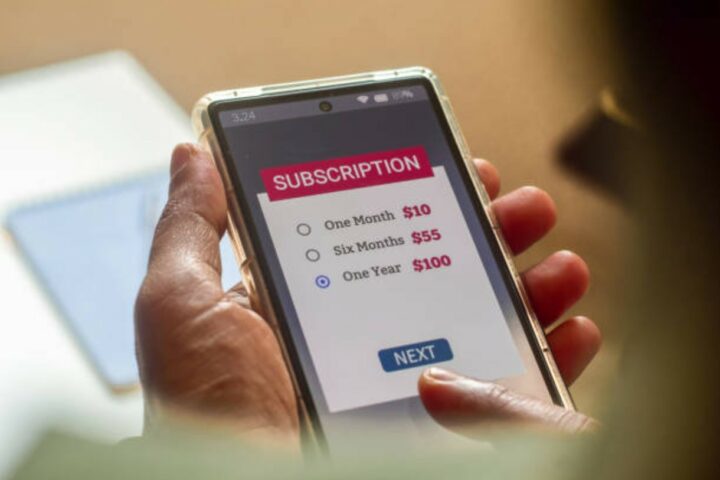
Price is not always the best place to start. A subscription may cost $20 and still be worth keeping if it is used every day. Meanwhile, a $3.99 app can sit untouched for months and quietly become the more pointless expense. Usage often tells more than the number on the statement.
Then there is the price people remember versus the price they are actually paying. Plans get more expensive, introductory rates disappear, and sometimes nobody notices until much later. Deloitte’s 2026 Digital Media Trends research found continued frustration among US consumers over rising entertainment subscription costs. That matters because a service that felt reasonable at one price can become much harder to justify after a few increases.
A lot of subscriptions survive for a much less interesting reason. Canceling them feels annoying enough to postpone. The password is forgotten, the account settings take a few minutes to find, or the charge appears at a bad moment and gets mentally filed under “later.” By the time later arrives, another payment may already have gone through.
For subscriptions that someone has already decided to end, Subdelete offers a way to send a formal cancellation request and keep a record of it. That can be useful when documentation matters. The subdelete refund terms are also worth checking separately because a fee paid to Subdelete and a later charge made by the subscription company are not the same thing. Those situations can look connected on a bank statement even though they follow different processes.
There is a broader reason to review recurring payments every few months. Subscription spending has a strange relationship with attention. A purchase made once has to earn the decision once. A recurring purchase keeps taking money after the decision has disappeared from memory.
That does not make subscriptions bad. In many cases, they are convenient and cheaper than buying services separately. But convenience works best when someone still wants what is renewing.
A short audit every few months is enough for most people. Keep the services that still fit current habits. Cancel the ones that belong to an older routine. Check trials before they roll into another billing period.
The useful question is not “How many subscriptions are too many?” There is no universal number. A better question is whether the charges on this month’s statement still match how money is being used now.