
Good diving depends on attention. A diver tracks depth, time, gas, buoyancy, the route, changing conditions, and the location of a buddy. Each check has a purpose, and each one briefly redirects the eyes. AREX ONE is bringing AR to scuba diving at IFA 2026, exploring on site whether the mask itself can make that information easier to access.
The company’s AREX ONE augmented-reality dive mask is making its public debut at ShowStoppers @ IFA Berlin on September 3, 2026. A transparent display places depth, dive time, gas data, and decompression status near the diver’s natural line of sight. The intended benefit is simple: critical information remains visible while the diver continues looking into the environment.
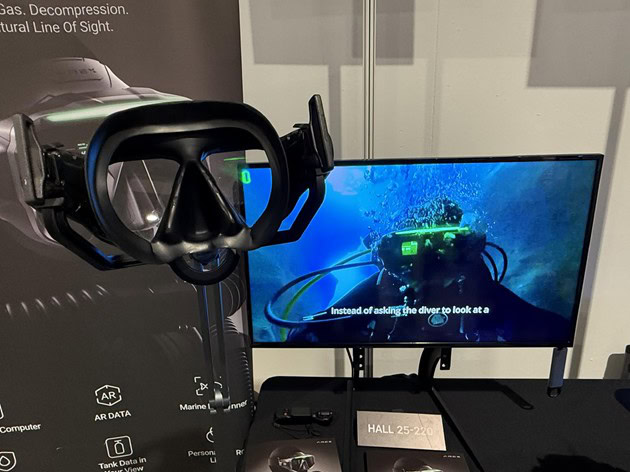
That idea has a human dimension. Underwater awareness includes the reef in front of you, the task in your hands, and the person sharing the dive. A well-designed heads-up display may reduce the small interruptions created by repeated wrist checks. It may also help photographers, dive professionals and search-and-rescue teams keep their visual attention on work that unfolds in real time.
Information design matters in this setting. A useful interface needs hierarchy, restraint and timing. Data that appears clearly at the right moment can support calm decision-making; crowded or poorly placed data can compete for attention. AREX says users will be able to adjust display position, customize layouts and suppress nonessential information as a dive develops.
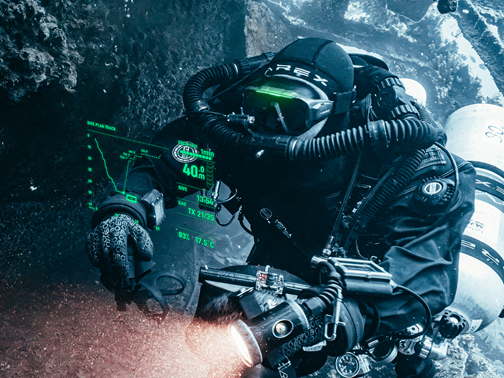
AREX ONE is designed for recreational, technical and closed-circuit rebreather diving. Its onboard computer supports Air, Nitrox and Trimix, with the Buehlmann ZHL-16C decompression model and adjustable Gradient Factors. Mechanical-style controls are intended to work with gloves, and alerts can appear through the display, vibration and external lighting.
An optional TX Pressure Pod can send tank-pressure readings to the mask. A Sync Dive Torch adds spot and flood lighting, while the Marine ID Scanner uses onboard vision technology to identify marine life and record discoveries. The latter could add a quieter form of learning to a dive, giving people a way to revisit what they encountered after returning to the surface.
No display removes the need for training, sound judgment, or established safety procedures. The meaningful question is whether the interface presents information clearly without crowding the view or creating a new source of distraction.
Visitors can experience the working prototype live from September 4 through 8 in Hall 25, Booth 220 at Messe Berlin as real-world underwater testing continues. Its official Kickstarter campaign opens on September 22, 2026, at an MSRP of $1,499.