
If you spend time trading currencies, sooner or later you will ask yourself: Shouldn’t I branch out? There are dozens of pairs out there, so why stick to just one? On paper, hopping between different pairs feels smart. If EUR/USD seems dull, maybe GBP/USD offers some action. If Europe goes quiet, the Asian markets might be heating up. Yet, managing several pairs is not as simple as it sounds.
Although tracking more currencies can open up new possibilities, it also brings new risks, and not always ones you see right away. Trading multiple markets is not really about filling your screen with charts, either. It is about understanding how those markets play off each other.
More Currency Pairs Do Not Automatically Mean More Profit

It is tempting to think that watching more pairs automatically means more profit. Many traders fall into this trap. They start slow, get comfortable with one pair, and then start piling on more charts. Pretty soon, they are juggling six or seven at once. Here is what most don’t realize: currency markets are tangled together.
You might think trading EUR/USD, GBP/USD, and AUD/USD is super diversified. However, all three can still rely on the same trigger – the US dollar. If the dollar suddenly acts up, all three trades might react at the exact same moment. Instead of spreading your risk, you might end up increasing exposure without realizing it. That is where correlation comes in.
Why Correlation Matters More Than You Think
Understanding how pairs move together or against each other is a game-changer. Some pairs mimic each other. Others don’t. For instance, EUR/USD and GBP/USD often run in the same direction, thanks to how much influence the US dollar has on both. Meanwhile, groups like AUD/USD and USD/CAD might dance to a different beat, especially when big news hits the commodities market.
If you ignore these connections, you should not be surprised if your trades go sideways. What looks like three opportunities might just be three versions of the same wager. Knowing how currency pairs interact helps you avoid unwanted surprises and make smarter trading moves.
Learning the Personality of Different Currency Pairs
Every currency pair has its quirks. Some pairs stay steady. Others jump and dive, seemingly out of nowhere. GBP/JPY is famous for wild swings, while EUR/USD feels much more manageable most days. Commodity pairs like AUD/USD and USD/CAD may react strongly if global resource prices shift.
Adding a new pair is not just about staring at another chart. You have to figure out when it is alive, what news moves it, and how fast it gets going. Veterans call this learning the personality of a pair. It is not something you pick up overnight.
How Technology Helps You Stay More Organized
Technology helps, though. Trading used to mean flipping back and forth between windows, tracking everything by hand. Now, every good Forex platform lets you line up watchlists, set alerts, analyze charts, and track open trades all in one place. However, technology should support your strategy rather than replace it. The fanciest software cannot prevent mistakes if your emotions or risk management are not well thought out.
Finding the Right Number of Markets for Your Trading Style
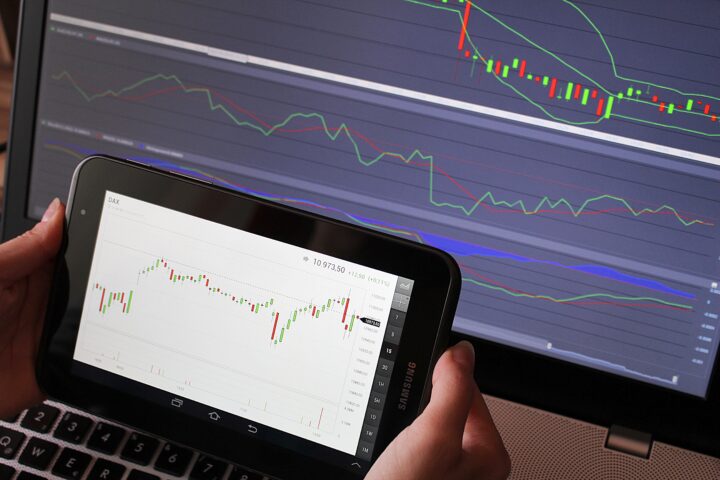
Swing traders have it easier. They hold positions longer, giving them time to watch several markets and make decisions without rushing. Day traders and scalpers are on a tight schedule. Trades close in minutes, and it is stressful trying to babysit multiple pairs without missing something important. One missed signal can cost you. So, there is no one-size-fits-all answer. Some traders watch eight or ten pairs. Others do better with just two or three. Neither is automatically “right.”
The safest bet is to go slow. You should not leap from one pair to six overnight. A better approach would be to add a new pair and get to know how it behaves. You would watch its volatility, schedule, and what kind of news shakes it up. You want to see if it fits with your style, or if it just distracts you. Taking it slowly helps you build up experience and spot problems early.
Final Thoughts
You can trade multiple currency pairs. However, success comes from preparation, not from trying to cover every market at once. You need to understand correlations, manage your risk, and give each trade its fair share of your attention.
For some traders, extra pairs bring new chances and flexibility. For others, it is just noise. The real goal is not to watch the most markets. It is about finding the number that works for your strategy and your trading schedule. In many instances, less truly is more. Concentrating on one carefully selected pair can be more profitable than being spread thin across many.